
How to Test Vacuum Insulation Performance and Leak-Proof Capabilities
Ensuring the quality of vacuum-insulated drinkware, such as bottles and tumblers, is crucial for both manufacturers and consumers. In this blog, we’ll walk you through the steps involved in testing the vacuum insulation performance and leak-proof capabilities of drinkware, with insights derived from expert standards practiced by companies like Medo Drinkware.
1. Testing Vacuum Insulation Performance
The vacuum insulation of a bottle or tumbler determines its ability to maintain the temperature of its contents, whether hot or cold. Here are the steps involved:
- Initial Temperature Check: Fill the bottle with hot or cold water depending on the test requirements, typically at a controlled starting temperature.
- Seal and Measure: Close the lid tightly and record the initial temperature using a thermometer.
- Environmental Conditions: Place the drinkware in a controlled environment such as a thermal testing chamber to simulate real-world temperatures.
- Time Interval Monitoring: After a set period (e.g., 6, 12, or 24 hours), measure the temperature again to determine the degree of temperature retention.
- Performance Benchmark: Compare the results to industry standards or customer expectations to evaluate effectiveness.
2. Testing Leak-Proof Capabilities
Leak-proof testing is essential to ensure that the drinkware doesn’t spill during use. The process includes:
- Fill Test: Fill the bottle with water or liquid to its maximum capacity.
- Lid Integrity: Secure the lid firmly to simulate typical usage conditions.
- Shake and Invert: Shake the drinkware vigorously and turn it upside down to test for leaks.
- Pressure Testing: Apply pressure equivalent to real-life accidental drops or impacts to check if spills occur.
- Visual Inspection: Check for any leakage around the lid edges or seams.
3. Why Testing Matters
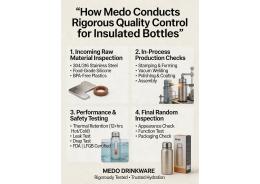
Stringent testing processes ensure that drinkware products are reliable, durable, and meet customer expectations. For companies like Medo Drinkware, who produce high-quality drinkware, this is an integral part of delivering value to their consumers.
4. Selecting Quality Drinkware
When purchasing drinkware, always prioritize products from reputable manufacturers who adhere to rigorous testing standards. Explore more about premium, tested drinkware options at Medo Drinkware.
Conclusion
Testing vacuum insulation performance and leak-proof capabilities is a meticulous process but essential for guaranteeing the quality of insulated drinkware. Both manufacturers and consumers benefit from these rigorous assessments, ensuring that each product performs as intended in real-world scenarios.

 English
 German
 French
 Russian
 Spanish
 Japanese
 Korean
 Portuguese
 Ukrainian
 Arabic
 Italian


